
New Mexico Weighs Higher Penalties, Flavor Restrictions and Nicotine Taxes Ahead of 2027
Posted by Alli Boughner on Oct 23rd 2026
New Mexico’s next legislative session could bring significant proposals for vape shops, nicotine pouch retailers and distributors serving the state.
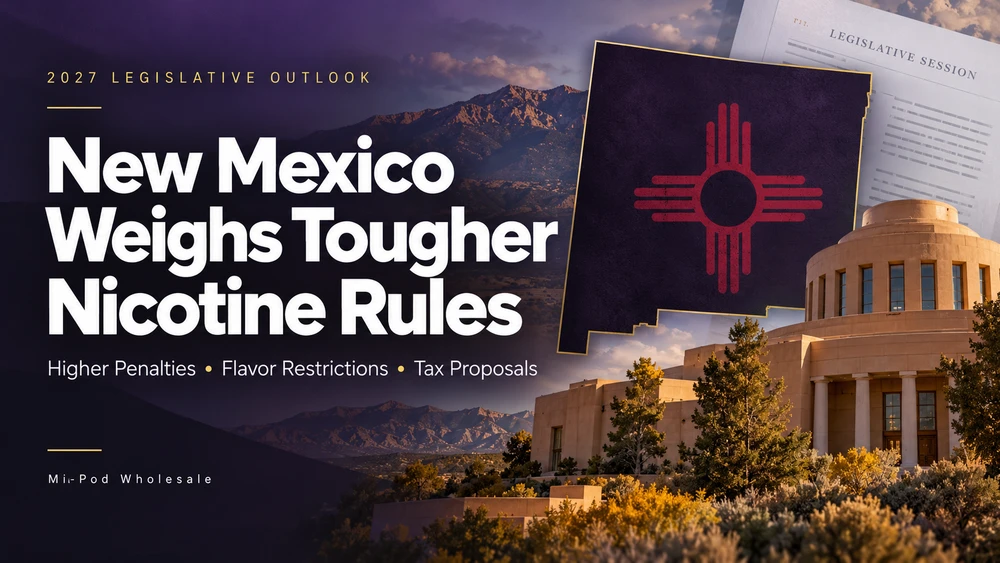
At an October 13, 2026, hearing of the Legislature’s Tobacco Settlement Revenue Oversight Committee, lawmakers discussed possible flavor restrictions and higher tobacco and nicotine taxes. The discussion also highlighted a broader effort to strengthen New Mexico’s consumer protection law.
These discussions did not establish new requirements. For wholesale businesses, they signal policy issues to watch as the 2027 session approaches. Source New Mexico’s hearing coverage outlines the potential changes.
Proposed Consumer Protection Penalties Could Reach $50,000 Per Violation
One proposal would increase penalties under New Mexico’s Unfair Practices Act from a maximum of $5,000 to $50,000 per violation—a tenfold increase.
The effort is part of a broader consumer protection overhaul announced in September by Attorney General Raúl Torrez, state Rep. Linda Serrato and Democratic gubernatorial nominee Deb Haaland. According to reporting on that announcement, the proposed legislation could allow still higher penalties when companies target children, people with disabilities or people under a guardianship.
The proposed overhaul extends beyond tobacco and nicotine products, but it matters to this industry because New Mexico is already using its consumer protection law to challenge vape retailers and distributors.
For businesses, the potential impact would depend on the final legislation, the conduct covered, and how violations are counted. A proposed $50,000 maximum should not be described as an automatic fine for every vape product sold.
Existing Litigation Adds Pressure on the Supply Chain
The New Mexico Department of Justice’s complaint against Circle K and other businesses names retailers and distributors and alleges unlawful conduct involving the marketing and sale of vaping products.
Those are allegations in a lawsuit, rather than findings that every defendant violated the law. Nevertheless, the case illustrates why wholesalers should pay attention to consumer protection enforcement alongside product-specific regulations.
A useful internal review should cover supplier records, product descriptions, packaging, and promotional claims. Businesses should be able to explain where their products come from and support the representations they make to retail customers.
Flavor Restrictions Are Part of the Discussion
Lawmakers also discussed restricting the flavors stores could sell as a way to address youth-oriented marketing.
The hearing coverage does not establish a final list of prohibited flavors, covered products, exemptions, or implementation dates. Retailers should therefore treat this as a developing legislative issue rather than an enacted statewide flavor ban.
For wholesalers, the eventual definitions would be critical. Businesses should look closely at whether any introduced bill addresses vapor products alone or also reaches nicotine pouches and other categories.
From an adult-access perspective, policymakers should distinguish between enforcing restrictions on youth sales and removing products purchased by adult consumers. Businesses participating in the debate can help by providing specific information about adult purchasing patterns, inventory exposure, and the practical effects of proposed restrictions.
Nicotine Pouch Taxes: Why Nicotine Source Matters
Nicotine pouch taxation was another issue raised at the hearing. Public health law consultant Megan Boelter told the committee that tobacco-derived nicotine pouches are currently taxed at 25% of the manufacturer’s price, while synthetic nicotine pouches fall outside that tax. Lawmakers discussed broader taxation of alternative nicotine products.
The New Mexico Taxation and Revenue Department’s tobacco products tax overview describes the general tax as 25% of the value of the tobacco product, payable by the first purchaser. The department’s overview defines tobacco products by reference to products made from or containing tobacco.
For businesses carrying nicotine pouches, this makes accurate product documentation particularly useful. A “tobacco-free” label alone should not replace confirmation of whether the nicotine itself is tobacco-derived or synthetic.
The distinction discussed at the hearing concerns the tobacco products excise tax. It should not be interpreted as a blanket exemption from every tax or other requirement.
What New Mexico Retailers and Wholesalers Should Do Now
Businesses can prepare for possible legislation without treating proposals as current law:
- Confirm nicotine source documentation. Request clear supplier information for pouch products rather than relying solely on front-label terminology.
- Review of marketing materials. Check packaging, website copy, social posts and retailer-facing promotions for unsupported claims or content that could raise youth-marketing concerns.
- Map inventory exposure. Identify which categories could be affected by flavor restrictions or expanded nicotine taxes.
- Watch the actual bill language. Definitions, tax bases, effective dates, and inventory transition provisions will determine the business impact.
- Explain operational concerns early. Give lawmakers concrete examples of how proposed changes could affect independent retailers and their adult customers.
The Tobacco Settlement Revenue Oversight Committee’s official page provides a starting point for following committee activity and meeting materials.
What Comes Next?
New Mexico businesses should watch for legislation addressing consumer protection penalties, flavor availability and nicotine taxation during the 2027 session. Each proposal will need to be evaluated on its own terms; the October hearing did not create a single, finalized regulatory package.
For retailers planning ahead, the priority is to maintain reliable product records, follow legislative developments, and distinguish proposed changes from enforceable requirements.
Visit Mi-Pod Wholesale for wholesale products and industry updates and confirm applicable New Mexico requirements before purchasing products for resale.