
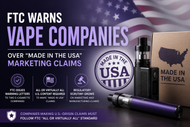
FTC Warns Vape Companies Over “Made in the USA” Marketing Claims
Posted by Alli Boughner on Jul 20th 2026
Federal oversight of the vapor industry is expanding beyond FDA authorization, product imports, and state registration requirements. The Federal Trade Commission has now warned two e-cigarette businesses that their U.S.-origin marketing claims may violate federal advertising rules.
Lucky Bar Holdings LLC and My Vape Order Inc. were included in a broader FTC enforcement initiative involving companies accused of marketing products as American-made despite indications that the products—or significant portions of them—were imported. Lucky Bar was specifically questioned over alleged “Made in Texas” representations.
The warning letters do not constitute final findings that either company broke the law. However, they place the businesses on notice that the FTC may pursue further action if unsupported claims continue.
What Triggered the FTC Warning Letters?
The FTC’s Made in USA Labeling Rule governs when companies may advertise products as domestically manufactured.
An unqualified statement such as:
- “Made in the USA”
- “American-made”
- “Manufactured in America”
- “Made in Texas”
generally means the advertised product is all or virtually all made in the United States.
That standard applies not only to final assembly, but also to the product’s components, manufacturing processes, and overall production costs. Products containing meaningful imported content may not qualify for an unqualified American-origin claim.
According to the FTC, consumers who intentionally purchase American-made goods should be able to trust that the products genuinely meet that standard. The agency’s July action included companies selling several types of merchandise, including e-cigarettes.
Why “Assembled in the USA” Is Not the Same as “Made in the USA”
A product does not necessarily qualify as American-made simply because it is packaged, labeled, filled, or assembled domestically.
For example, a vape product may include:
- Imported hardware
- Foreign-produced batteries
- Imported electronic components
- Foreign-made tanks or pods
- Imported packaging components
- Overseas manufacturing or assembly
When a product includes significant foreign content, a company may need to use a carefully qualified statement that clearly explains which part of the manufacturing process occurred in the United States.
The precise wording matters. A truthful statement about domestic assembly is not interchangeable with an unqualified claim that the entire product was made in America.
Federal Focus on Domestic-Manufacturing Claims Is Increasing
The warning letters follow a March 2026 executive order directing the FTC to intensify enforcement against deceptive “Made in America” advertising. The order emphasizes protecting consumers and businesses that legitimately manufacture their products domestically from competitors using unsupported origin claims.
For the vapor industry, this creates another area of potential federal exposure.
Companies are already navigating:
- FDA premarket authorization requirements
- Import detention and seizure activity
- State product directories
- Manufacturer and wholesaler licensing
- Packaging and labeling rules
- Age-verification requirements
- Marketing restrictions
FTC advertising compliance must now receive the same attention, particularly when product descriptions reference American production or manufacturing.
Imported Vape Products Are Receiving Broader Scrutiny
The FTC action also arrives as the FDA seeks additional information about foreign tobacco-product manufacturers.
In June, the FDA proposed new establishment-registration and product-listing regulations that would apply to both domestic and foreign manufacturers. Foreign businesses would be required to register facilities and provide detailed information about tobacco products intended for the U.S. market.
The proposed reporting requirements would include information such as:
- Nicotine concentration and source
- Characterizing flavors
- Package type and size
- FDA submission tracking numbers
- E-liquid volume
- Battery capacity
- Device wattage
FDA has described the proposal as a way to strengthen accountability for foreign manufacturers and improve oversight of imported tobacco products.